Do you know how C&D recycling works?
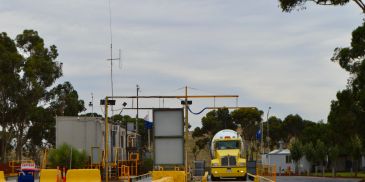
1. Receiving and Inspection Area
When incoming loads enters the site – they are:
Weighed
Visually inspected
Checked for contamination
Materials that do not meet acceptance standards are removed. This protects product quality and environmental compliance.
Unfortunately, there are times when recyclers receive contaminated products, i.e. with as
1. Receiving and Inspection Area
When incoming loads enters the site – they are:
Weighed
Visually inspected
Checked for contamination
Materials that do not meet acceptance standards are removed. This protects product quality and environmental compliance.
Unfortunately, there are times when recyclers receive contaminated products, i.e. with asbestos, and this requires expensive and specialised work to remove.
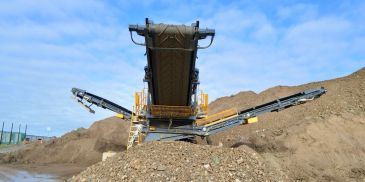
2. Crushing Plant – Breaking Materials Down
Large pieces of concrete, brick and rock are fed into a crushing plant.
Mechanical crushers reduce materials into smaller fragments that can be reused. Crushed material move along conveyor belts to the next processing stage.
Dust controls that include:
Covered conveyors
Flexible chutes at drop p
2. Crushing Plant – Breaking Materials Down
Large pieces of concrete, brick and rock are fed into a crushing plant.
Mechanical crushers reduce materials into smaller fragments that can be reused. Crushed material move along conveyor belts to the next processing stage.
Dust controls that include:
Covered conveyors
Flexible chutes at drop points
Water spray bars to suppress dust
Enclosed transfer points
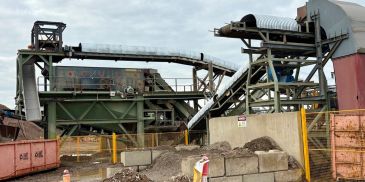
3. Screening Plant – Sorting by Size
The screening plant separates crushed materials into defined sizes using vibrating industrial screens.
Materials are sorted into:
Coarse aggregates
Road base
Sand and fine material
Oversized material is returned for further crushing.
Because screening involves vibration and material movement, it can gene
3. Screening Plant – Sorting by Size
The screening plant separates crushed materials into defined sizes using vibrating industrial screens.
Materials are sorted into:
Coarse aggregates
Road base
Sand and fine material
Oversized material is returned for further crushing.
Because screening involves vibration and material movement, it can generate dust and noise. Water sprays, conveyor covers and stockpile management practices are used to minimise impacts.

4. Pugmill Plant – Producing Engineered Materials
To meet strict civil construction standards, recycled materials are often blended in a pugmill plant.
A pugmill is a continuous twin-shaft mixing system.
How a pugmill works
Crushed concrete, asphalt or soil are fed via variable speed belts.
Twin shafts with paddles blend the materials evenl
4. Pugmill Plant – Producing Engineered Materials
To meet strict civil construction standards, recycled materials are often blended in a pugmill plant.
A pugmill is a continuous twin-shaft mixing system.
How a pugmill works
Crushed concrete, asphalt or soil are fed via variable speed belts.
Twin shafts with paddles blend the materials evenly.
Water and binders (such as cement or bitumen emulsion) are added through a controlled spray system.
The output is a uniform, moisture-conditioned mixture.
Products include:
Cement Treated Base (CTB)
Recycled Asphalt Pavement (RAP)
Stabilised soil products
Engineered road base
These materials are stockpiled or loaded directly into trucks for infrastructure projects.
The Victorian Government’s Big Build projects are aiming for 100% circularity — meaning materials from demolition are recycled and used again in new construction.
5. Timber Plant
Recovered timber is sorted and processed separately.
Contaminants are removed.
Timber is screened and size-reduced.
Flexible discharge chutes reduce dust at transfer points.
Processed timber may be reused as mulch, engineered wood fibre, or as renewable biomass fuel.
Environmental Management & Continuous Improvement
Recycli
5. Timber Plant
Recovered timber is sorted and processed separately.
Contaminants are removed.
Timber is screened and size-reduced.
Flexible discharge chutes reduce dust at transfer points.
Processed timber may be reused as mulch, engineered wood fibre, or as renewable biomass fuel.
Environmental Management & Continuous Improvement
Recycling facilities operate under environmental licences and regulatory oversight. Beyond compliance, many precincts are investing in continuous improvement initiatives.
Dust Management Systems
Dust can be generated during crushing, screening, material transfer and vehicle movement. Managing it requires multiple layers of control.
Operational dust controls include:
Water spray suppression systems
Spray bars at transfer points
Covered conveyors
Flexible chutes at discharge points
Enclosed or shielded transfer points
Managed stockpiles and housekeeping
Additional suppression measures may include:
Boundary spray systems
Water cart spraying internal roads
Road sweeping machines for internal roads and external roadways
Perimeter tree planting and vegetative buffers
Physical barriers such as buffering walls or modified shipping container screens
Covered or strategically placed stockpiles
Site Design & Vehicle Management
Site layout and operational design also play an important role in reducing dust generation.
Real-Time Dust Monitoring
The participant businesses at BRG are using a network of shared dust sensors across multiple sites.
These purpose of dust sensors:
Monitor real-time dust levels
Provide data to identify tr
Site Design & Vehicle Management
Site layout and operational design also play an important role in reducing dust generation.
Real-Time Dust Monitoring
The participant businesses at BRG are using a network of shared dust sensors across multiple sites.
These purpose of dust sensors:
Monitor real-time dust levels
Provide data to identify trends
Support evidence-based operational adjustments
Improve transparency
This data-driven approach strengthens accountability and supports measurable environmental improvement.

Subscribe to our Community Newsletter
To keep informed of all relevant communications and updates from Brooklyn Recycling Group.